_page-0001.jpg)
Waste trucks are supposed to collect rubbish. Instead, most fleets also collect invisible costs: deadhead kilometres, second trips for the same bin, and drivers who live permanently “just 20 minutes behind schedule.”
In 2026, AI route optimization gives waste operators a superpower: more bins emptied with the same trucks and crews by killing empty streets and broken routes, not by squeezing drivers harder.
You’re sending trucks out like it’s 1999. They’re driving past half empty streets, revisiting missed bins, and limping back to the depot on overtime… and then we blame “fuel prices.”
Let’s fix the real problem.

If you mapped your current routes, would they look like a neat loop… or a toddler’s drawing?
Typical waste patterns:
Route optimization studies show you can cut 10–30% of total distance and fuel just by planning compact routes and smarter tip runs. That’s like taking every third fuel invoice and throwing it in the bin where it belongs.
Customers don’t care how heroic the route was. They care if the bin was empty when they woke up.
Things that quietly explode cost:
Demand‑based routing and smart bin data let you collect when it’s needed, not “because it’s Thursday.” Fewer surprise overflows, fewer double runs, fewer angry emails with photos.
On paper, every route finishes “by 3pm.” In real life:
The problem isn’t the drivers. It’s that nobody recalibrated routes and shifts when the city grew, traffic changed, or new customers were bolted on.
Re‑optimizing master routes and matching them to realistic shift lengths has delivered 5–25% reductions in driver hours and vehicle shifts in real waste fleets. That’s overtime you simply stop generating.
Forget the buzz for a second. In waste, AI is basically a ruthless planner that:
Imagine a normal week with Syncnox in the mix:
You didn’t buy a single new truck. You just stopped wasting the ones you already have.
Compared to generic route planners, Syncnox can tell a very specific story:
A simple line you can use:
“Syncnox helps waste operators empty more bins, burn less fuel, and send fewer ‘sorry we missed you’ trucks without buying a single extra vehicle.”
If you’re serious about this, track:
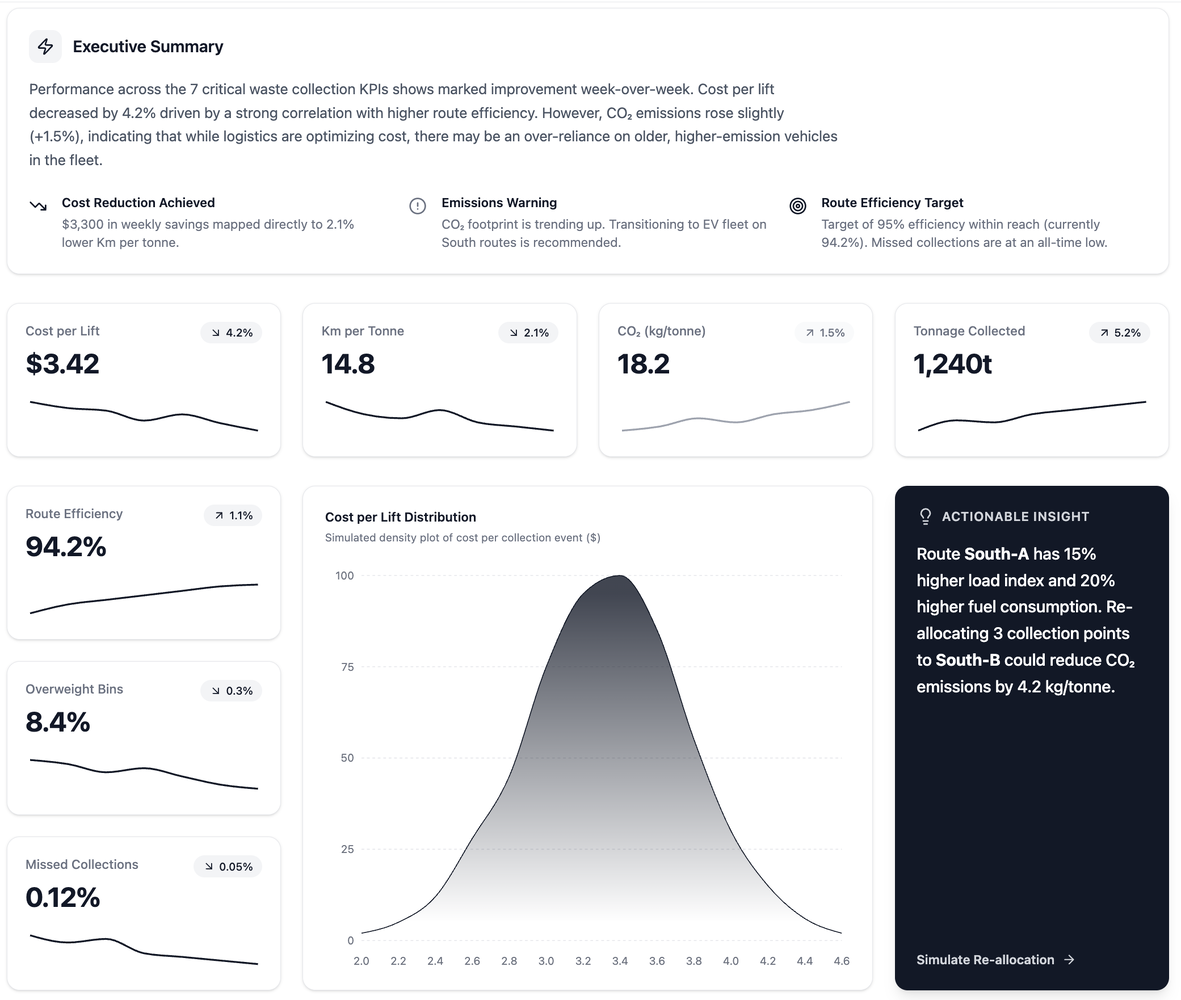
AI‑driven optimization and dynamic routing in waste collections have already shown:
Not magic. Just better maths applied to the mess you already know.
If your trucks feel busy but your P&L says otherwise, it’s probably empty streets and broken routes doing the damage.
Share your fleet size and collection area with us at syncnox.com, and we’ll map out where AI route optimization and workforce scheduling could cut fuel, missed bins, and overtime-before you commit to any new hardware or vehicles.
_page-0001.jpg)
Subscribe to stay on top of new product features, releases, use cases, video chats with experts and learning opportunities.
_page-0001.jpg)
How Dairy Operators can Cut Costs and Improve Freshness
_page-0001.jpg)
Problems hiding inside your field teams
.svg)
To connect with a product expert today, email us or call +44 07454961942.
.png)

.png)
.png)
.png)