AI Route Optimization for Waste Collection: Stop Driving Empty Streets - How to Cut Fuel, Missed Bins, and Overtime Without Adding a Single Truck
Waste trucks are supposed to collect rubbish. Instead, most fleets also collect invisible costs: deadhead kilometres, second trips for the same bin, and drivers who live permanently “just 20 minutes behind schedule.”
In 2026, AI route optimization gives waste operators a superpower: more bins emptied with the same trucks and crews by killing empty streets and broken routes, not by squeezing drivers harder.
You’re sending trucks out like it’s 1999. They’re driving past half empty streets, revisiting missed bins, and limping back to the depot on overtime… and then we blame “fuel prices.”
Let’s fix the real problem.
Where the Money Really Leaks (It’s Not Just Fuel)
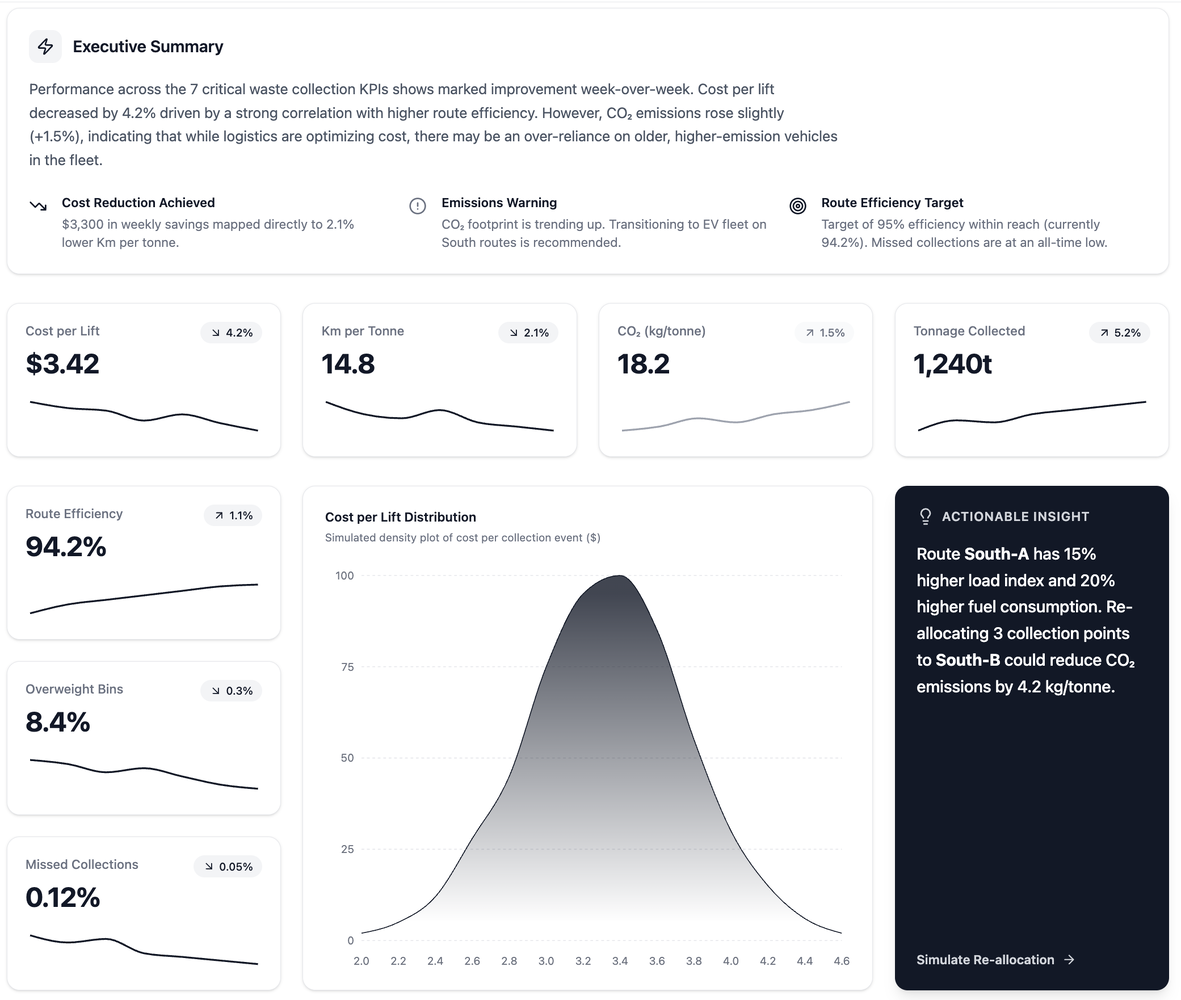
KPI's to measure
1. Fuel: When Your Trucks Are Doing City Tours
If you mapped your current routes, would they look like a neat loop… or a toddler’s drawing?
Typical waste patterns:
Trucks criss‑crossing each other’s zones.
Long deadhead runs to the landfill at the worst possible time.
Daily detours through the same choke points “because that’s how we’ve always done it.”
Route optimization studies show you can cut 10–30% of total distance and fuel just by planning compact routes and smarter tip runs. That’s like taking every third fuel invoice and throwing it in the bin where it belongs.
2. Missed Bins and “We’ll Come Back Tomorrow”
Customers don’t care how heroic the route was. They care if the bin was empty when they woke up.
Things that quietly explode cost:
Static “every Thursday” schedules when some sites fill in 2 days and others in 9.
Overflowing bins that trigger complaints, penalties, and emergency pickups.
No smart way to insert last‑minute or ad‑hoc collections into routes already on the road.
Demand‑based routing and smart bin data let you collect when it’s needed, not “because it’s Thursday.” Fewer surprise overflows, fewer double runs, fewer angry emails with photos.
3. Overtime: Because the Plan Lived on Planet Fantasy
On paper, every route finishes “by 3pm.” In real life:
One crew is back at 14:30 washing the truck.
Another is still chasing the last cul‑de‑sac at 18:45.
The problem isn’t the drivers. It’s that nobody recalibrated routes and shifts when the city grew, traffic changed, or new customers were bolted on.
Re‑optimizing master routes and matching them to realistic shift lengths has delivered 5–25% reductions in driver hours and vehicle shifts in real waste fleets. That’s overtime you simply stop generating.
What AI Actually Does (Beyond Buzzwords)
Forget the buzz for a second. In waste, AI is basically a ruthless planner that:
Learns where rubbish really comes from It studies your historical routes, bin weights, seasons, and days of week. It spots patterns: “This industrial area explodes on Mondays; this residential zone barely fills mid‑week.” Then it plans accordingly.
Stops trucks driving empty streets It compacts routes so you don’t need three trucks doing roughly the same area on different days. It aligns tip runs with capacity and location, so you don’t hit max load in the worst place and burn 40 minutes getting to the landfill and back.
Changes the plan during the day, not just before it
Thinks about people and trucks together Most tools optimize routes. AI can optimize routes + workforce schedules: shifts, crews, vehicle driver pairing, and legal limits in one brain. That’s how you stop making routes that only work if drivers are superheroes.
Sunday: The system crunches last month’s data. It updates demand patterns, bin hotspots, and typical route durations.
Night before: It builds routes and assigns crews and vehicles, targeting balanced shifts and minimal deadhead.
Morning: Drivers get realistic runs on their app not a wish list.
During the day: Traffic, breakdowns, and urgent pickups happen. Syncnox quietly reshuffles tasks between trucks so the whole network still finishes roughly on time.
End of week: Ops look at a few simple KPIs: km per tonne, missed/overflow incidents, overtime hours. If something’s off, they tweak constraints not beg drivers to “push a bit harder.”
You didn’t buy a single new truck. You just stopped wasting the ones you already have.
Why Syncnox Makes Sense for Waste Fleets
Compared to generic route planners, Syncnox can tell a very specific story:
Route optimization tuned for waste: multiple depots, landfills, transfer stations, access constraints, and collection calendars not just parcels on a map.
AI workforce scheduling built‑in: routes that respect real shift lengths, break rules, and labour costs, so overtime becomes the exception, not the default.
Dynamic operations, not static PDFs: when your day changes (and it will), routes and shifts adapt instead of leaving drivers to “make it work.”
A simple line you can use:
“Syncnox helps waste operators empty more bins, burn less fuel, and send fewer ‘sorry we missed you’ trucks without buying a single extra vehicle.”
The KPIs That Prove It’s Working
If you’re serious about this, track:
Km per tonne collected.
Fuel per route / per tonne.
Cost per lift.
Missed or overflow incidents per 1,000 bins.
Average route duration vs planned.
Overtime hours per week.
CO₂ per tonne collected.
KPI's
AI‑driven optimization and dynamic routing in waste collections have already shown:
10-30% fewer kilometres and fuel.
5-25% fewer driver hours or shifts.
20-30% fewer unnecessary collections.
Noticeable drops in missed/overflow events.
Not magic. Just better maths applied to the mess you already know.
If your trucks feel busy but your P&L says otherwise, it’s probably empty streets and broken routes doing the damage.
Share your fleet size and collection area with us at syncnox.com, and we’ll map out where AI route optimization and workforce scheduling could cut fuel, missed bins, and overtime-before you commit to any new hardware or vehicles.
_page-0001.jpg)

_page-0001.jpg)
.svg)