_page-0001.jpg)
By a founder‑builder who’s been on the ops floor too long
You’re probably reading this at 6:45 a.m. Your phone buzzes: “We’re one van short today.”
Your laptop opens to three spreadsheets that disagree with each other. Your nurse is stuck in traffic trying to make a 9:15 pickup because the route was planned… yesterday.
Welcome to the “home‑health and NEMT ops in 2026” experience: a perpetual game of whack‑a‑mole, where every time you fix one problem, three more pop up.
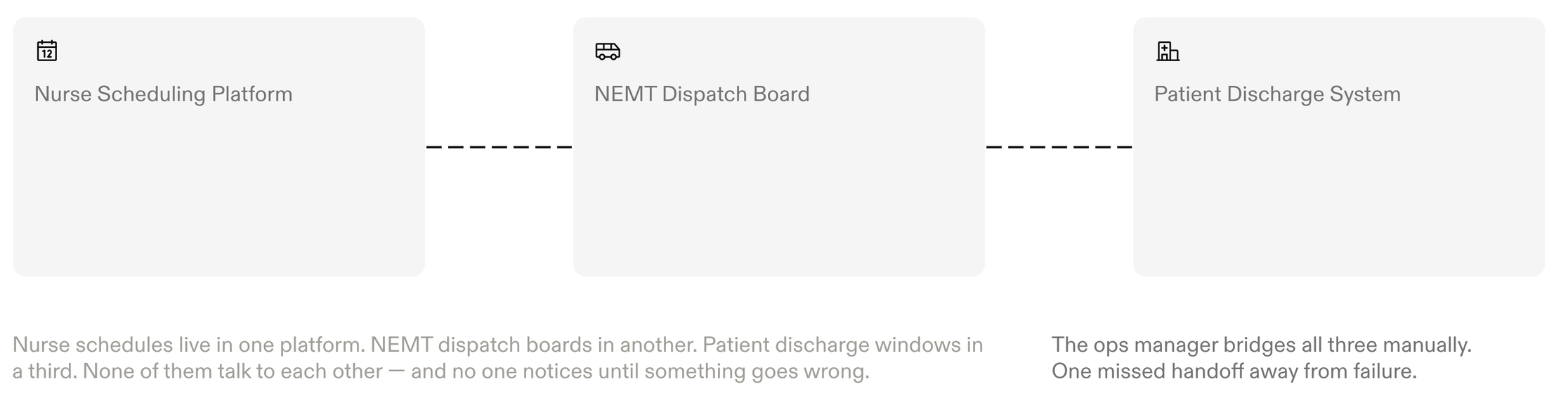
McKinsey has a habit of calling things by their real name: “chaotic operations disguised as planning.” In home health and NEMT, that’s an understatement.
This isn’t “operations.” This is organized chaos with a smiling mask.
If you ask your vendor: “Is this system built for NEMT and home‑health?” Most of the time the answer is: “We made it for hospitals and then adjusted the font.”
Consulting companies loves to say: “AI doesn’t just automate; it re‑designs the workflow.” In NEMT and home‑health, that hits hard.
Here’s how an AI‑agentic scheduling system like Syncnox changes the game:
When you actually let AI‑agentic scheduling run the heavy‑lifting, the difference is different‑level but weirdly human:
One Home‑Health Clinical Manager said:
“For the first time, my nurses are judging me on culture, not on how often I interrupt their weekends.”
NEMT Ops Director:
“I’m not the one who finds out the schedule is broken anymore. The system finds it and suggests a fix.”
Syncnox isn’t trying to replace humans. We’re building an AI‑agentic operations layer that connects:
…into a single system that feels human because it doesn’t treat humans like spreadsheets.
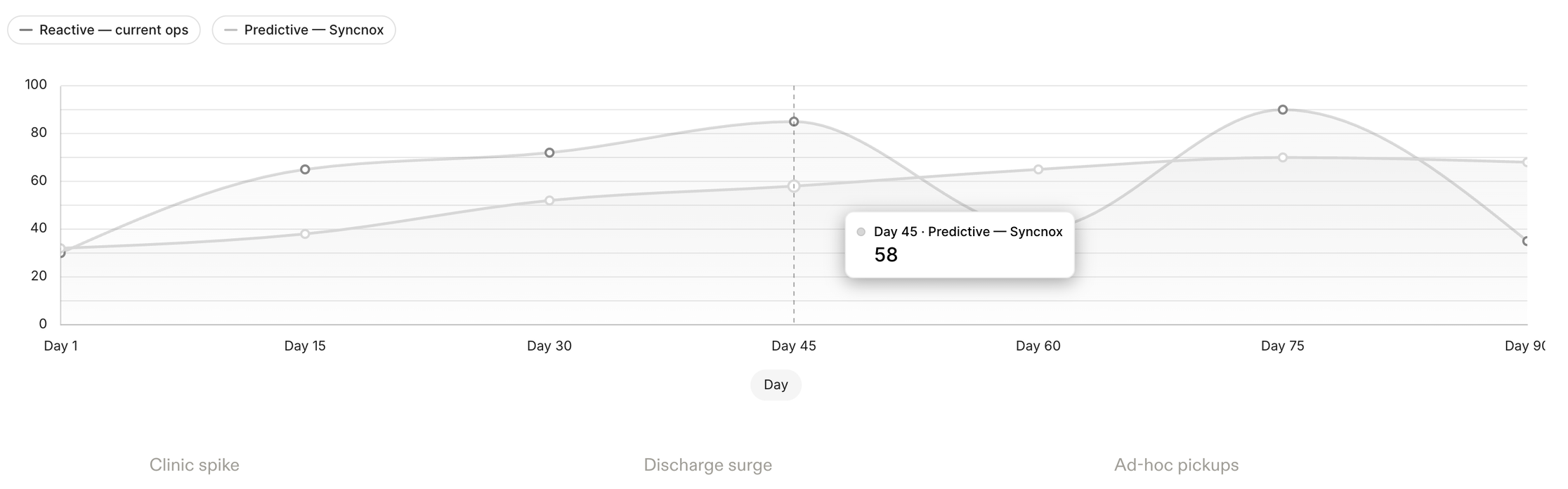
In 2026, the difference between a chaotic NEMT / home‑health team and a calm, predictable operation isn’t just better hiring. It’s better scheduling the kind that’s AI‑driven, agentic, and frankly a little funny when you see how much simpler it can be.
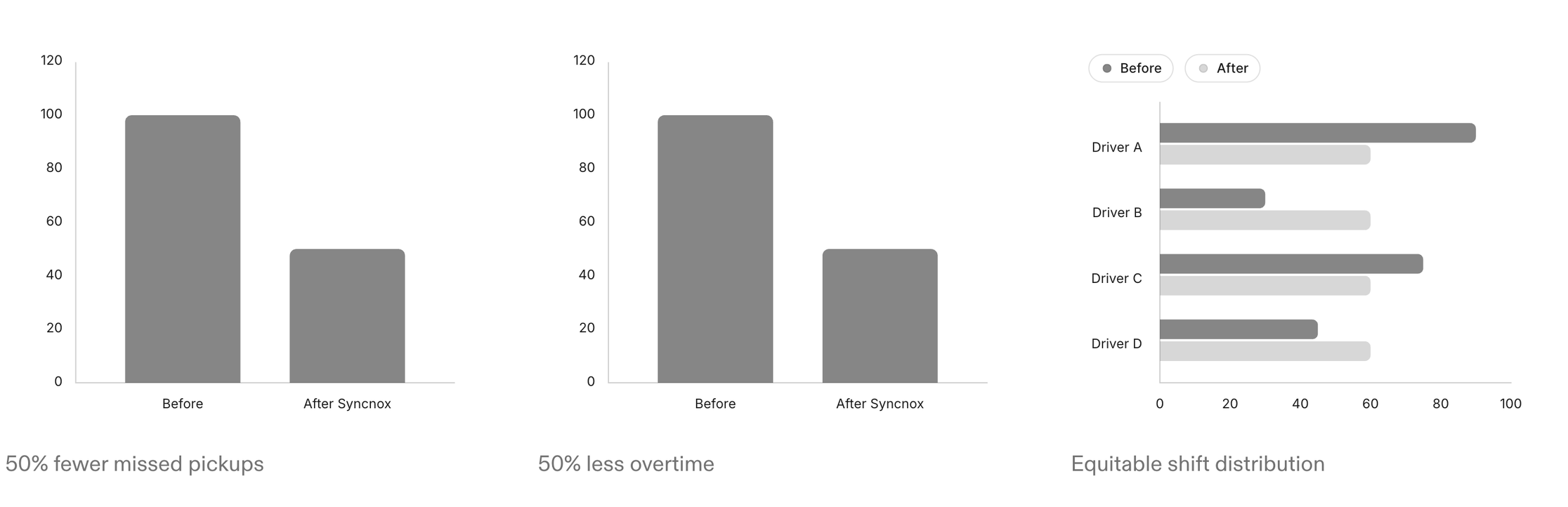
If you’re the Ops Director or Clinical Manager who’s tired of playing whack‑a‑mole, the question isn’t “Can we afford AI‑driven scheduling?” It’s “Can we afford to keep doing this by hand for another year?”
Because in 2026, letting an AI‑agent handle the chaos means you finally get to focus on the work that actually matters.

Subscribe to stay on top of new product features, releases, use cases, video chats with experts and learning opportunities.
_page-0001.jpg)
How Dairy Operators can Cut Costs and Improve Freshness
_page-0001.jpg)
Problems hiding inside your field teams
.svg)
To connect with a product expert today, email us or call +44 07454961942.
.png)